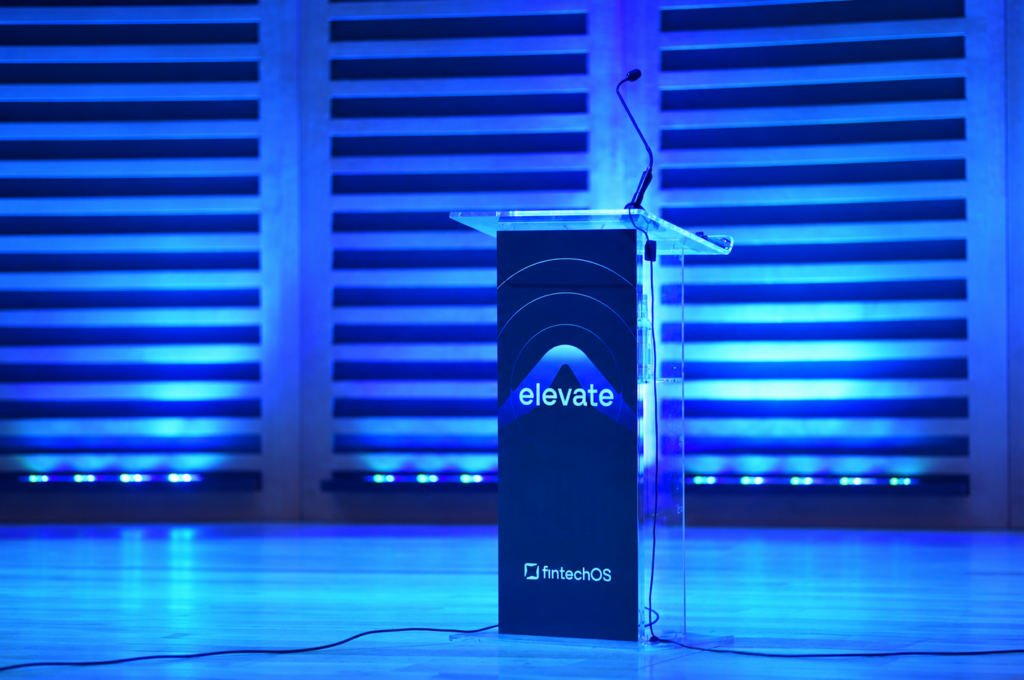
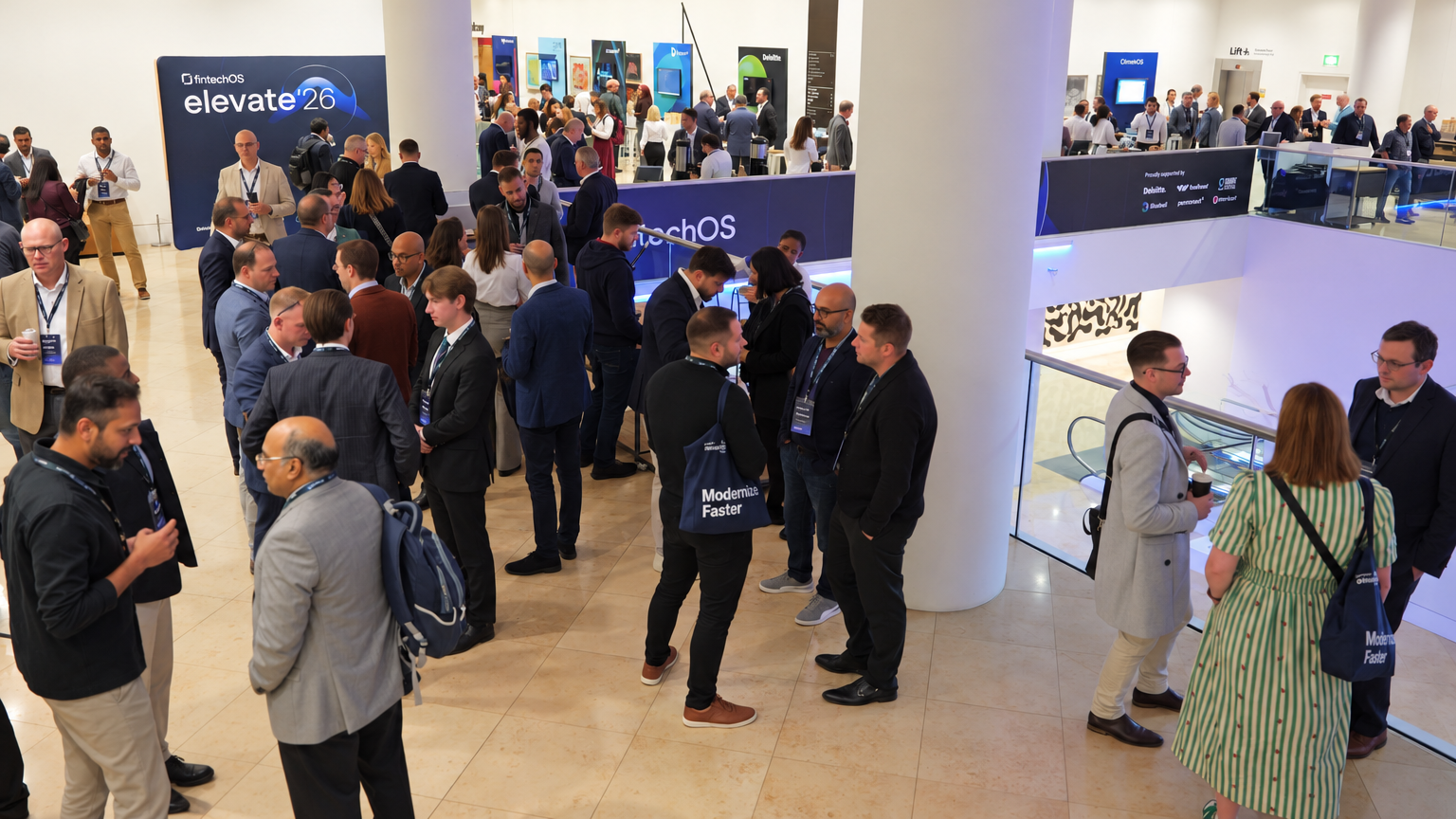
On 14 October 2026, more than 300 banking and insurance leaders gathered at Kings Place in London for Elevate ’26, FintechOS’s flagship annual event. With registrations more than doubling year on year, the event brought together clients, partners and industry experts to explore how AI can accelerate product innovation and deliver measurable business value.

How can financial institutions move beyond AI experimentation to deliver meaningful change?
This question ran throughout the day. Across keynotes, panel discussions, fireside chats and live product demonstrations, one message stood out: the opportunity is no longer simply to adopt AI, but to rethink how financial products are built, delivered and managed.
Discussions spanned AI-driven product innovation, customer experience and the practical challenges of embedding intelligence across banking and insurance. So, what were the key takeaways?
From AI experimentation to business value
In her keynote, The AI Reckoning, Leda Glyptis challenged organisations to look beyond the initial excitement around AI and focus on results. Individual productivity gains do not automatically translate into wider business improvements. Meaningful impact requires clear priorities, effective governance and measurable outcomes.
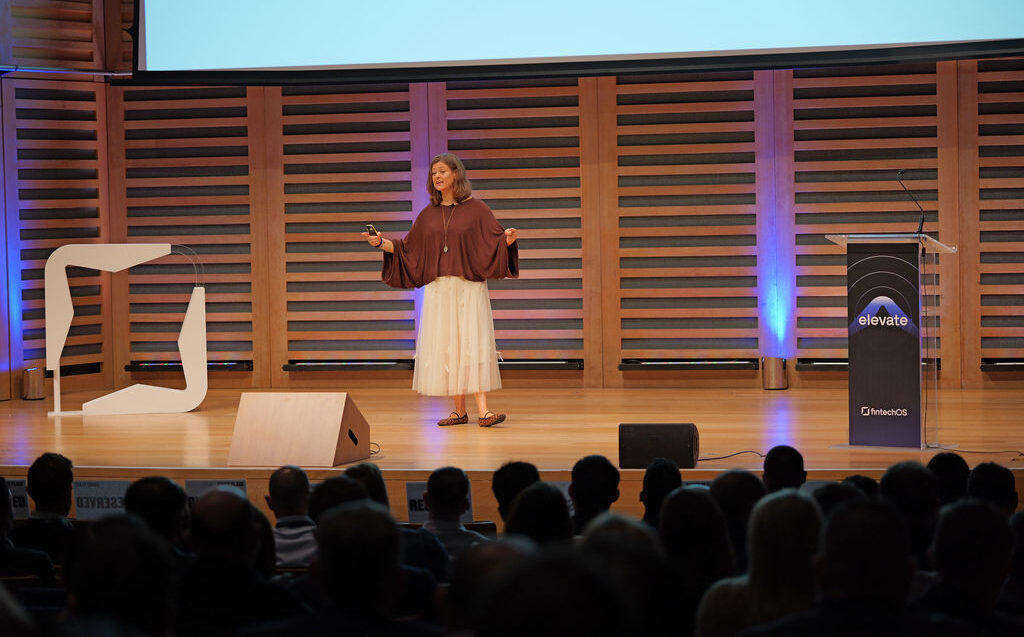
The same theme emerged in discussions on customer experience. In a fireside chat on AI-native customer experience, Rania Svoronou, Global Head of AI Design at Citi, stressed the importance of designing AI around the entire customer journey, rather than adding isolated tools that create complexity without addressing underlying problems. She also introduced creative resilience: the ability to adapt and experiment as roles and technologies evolve.
For financial institutions, the challenge is to move beyond promising pilots towards practical applications that improve processes, customer outcomes and operational performance.
FintechOS Blue Sky: Connecting intelligence across the product lifecycle
In his opening keynote, FintechOS CEO and Founder Teo Blidarus argued that fragmented products, processes and data limit AI’s potential. Connected infrastructure, by contrast, enables intelligence to be applied across the product lifecycle.
That vision came to life with the unveiling of FintechOS Blue Sky. Teo Blidarus and Byron Levin, Head of Presales at FintechOS, demonstrated how it brings AI into product development and day-to-day operations through two copilots: Dex, which translates specifications and conversational instructions into configured products, pricing and workflows, and Abi, which supports operational analysis and customer interactions.
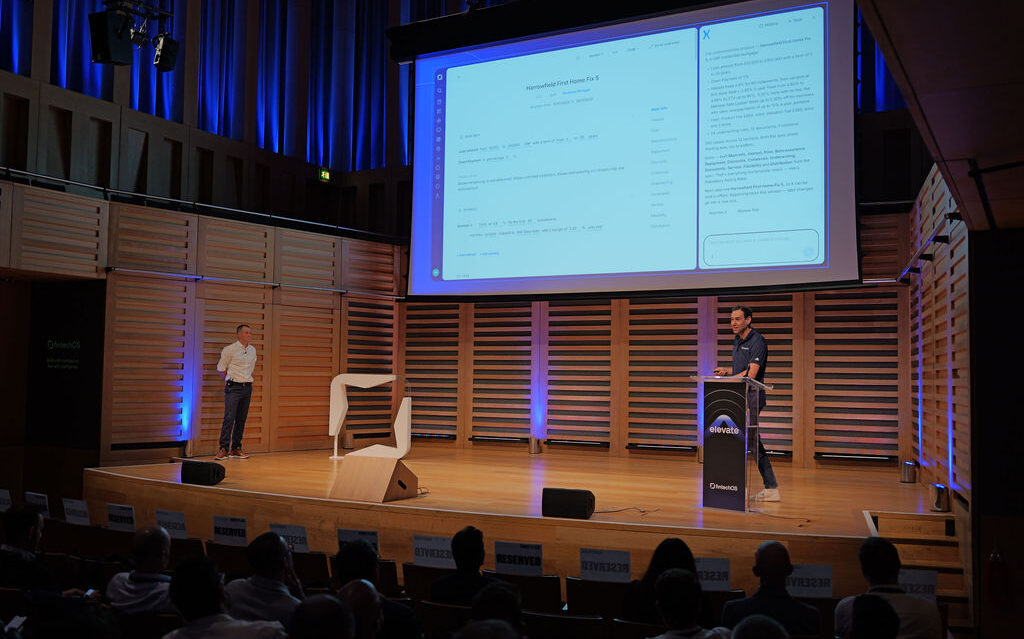
Later sessions explored how these capabilities could be applied in practice. Byron Levin and Mark Dearman, Director of Industry Banking Solutions at FintechOS, demonstrated how AI could support mortgage product creation, broker-led applications and commercial loan assessments. Meanwhile, Kevin Knorr, Chief Information Officer at MHG Insurance, and Gerry Goodwin, VP Sales for Western Europe at FintechOS, showcased how AI agents could coordinate pricing, claims, policy updates and payment reconciliation in motor insurance.
Throughout the demonstrations, the emphasis remained on governance, transparency and human oversight. Discussions with Darren Ditchburn, CEO of Vernon Building Society, and Joshua Weinstein, co-CEO of Gable Group, explored how AI capabilities could be applied in real lending environments, reinforcing the principle that lenders must own consequential decisions and understand how AI reaches its recommendations.
Together, these examples illustrated how connected AI capabilities could reduce manual work, streamline workflows and help financial services teams make faster, better-informed decisions.
Keeping people and accountability at the centre
Greater automation does not remove the need for human judgement. If anything, it makes accountability more important.
Discussions across banking and insurance highlighted the importance of transparency, governance and appropriate human oversight, particularly where AI supports consequential decisions such as lending, underwriting and claims.
In a fireside chat on product innovation and market expansion, Paroma Chatterjee, CEO of Revolut India, explored how financial institutions can balance a consistent global proposition with the local adaptation needed to serve different markets. She outlined the importance of sequencing market entry, understanding local payment behaviours and integrating AI into product design from the outset.


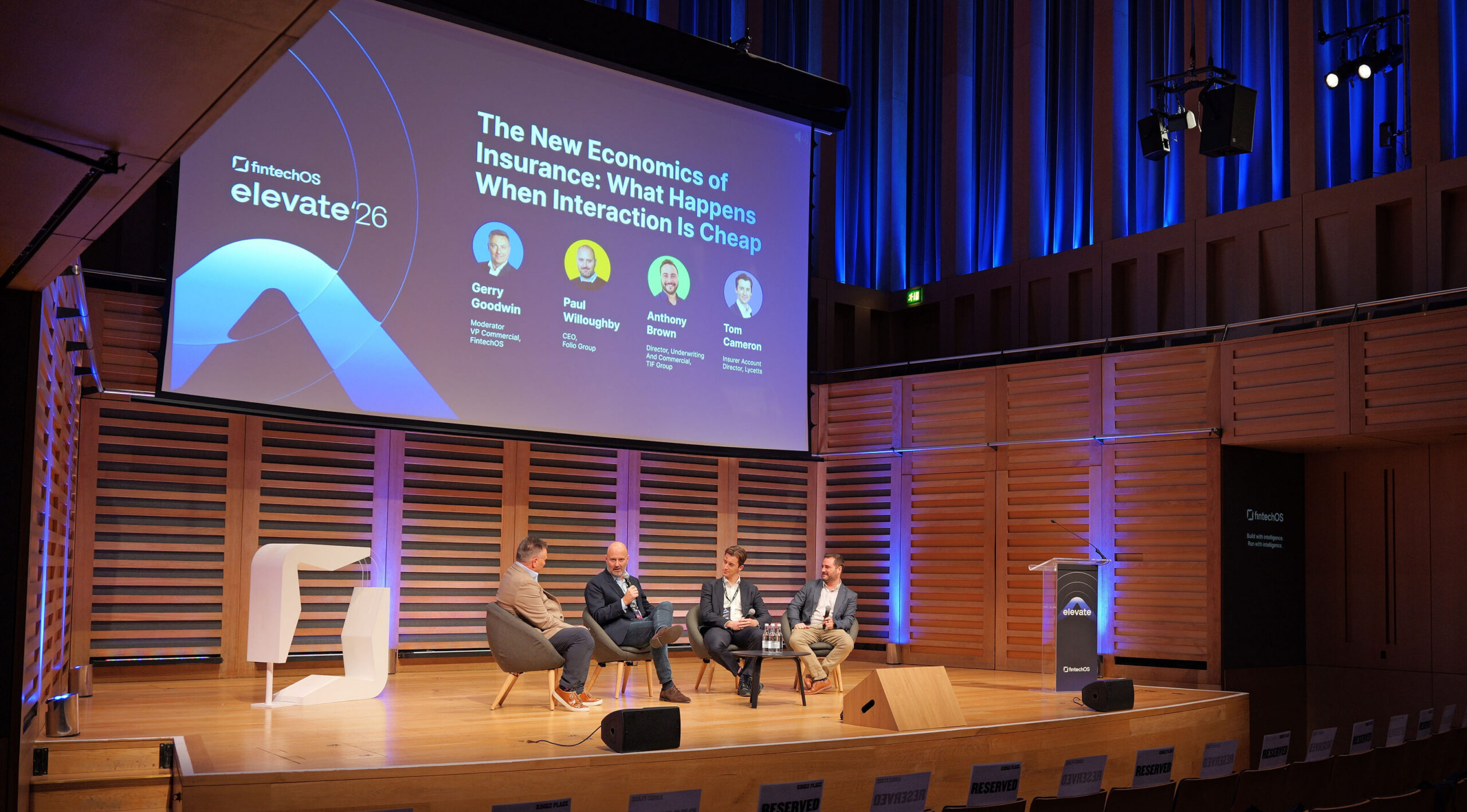
Willoughby, Tom Cameron, Anthony
Brown
A panel on customer experience in insurance, featuring Alex Gavril, Dana Muntean, Head of Insurance at ElevenLabs, and Alex Bibic, Head of Product at CFC, explored how insurers can address friction across key interactions while maintaining trust and transparency. Dana argued that the best AI pilots are treated as production-ready from day one, with business, legal and compliance teams involved early.
The common thread was clear: successful AI adoption depends as much on people, processes and organisational readiness as it does on technology.
What comes next?
Elevate ’26 highlighted a shift in the industry’s approach to AI: from experimentation to implementation, and from isolated tools to intelligence embedded across products and workflows.
For banks and insurers, the challenge now is to translate that potential into measurable results, combining connected data and practical automation with the governance, human judgement and organisational readiness needed to make it work.
The conversation continues at Elevate ’27.